AstroPI - Measuring the speed of the ISS
The European Space Agency (ESA) advertised a competition called AstroPI. The goal of the project was to develop software that can determine the speed of the ISS simply by using the camera feed. This was difficult, because it required trying to accuractely match features on a rapidly changing image. The best candidates were selected and allowed to have their code run on the ISS. By including various techniques to verify that the matches were accurate my software was good enough and has ran on the ISS.
Our team from Colchester Royal Grammar School participated in this challenge. I was the key player in this team. I spent a lot of time with the ostensibly trivial task of measuring speed from imagery. In the orbital context, this task prooved to be a formidable exercise. Speed calculation wasn't easy. Beneath the ISS, continents slip into night, sun-glint skitters across oceanic expanses, and cloud decks rearrange themselves into ephemeral mosaics whose motion is decoupled from the station’s own inertial trajectory.
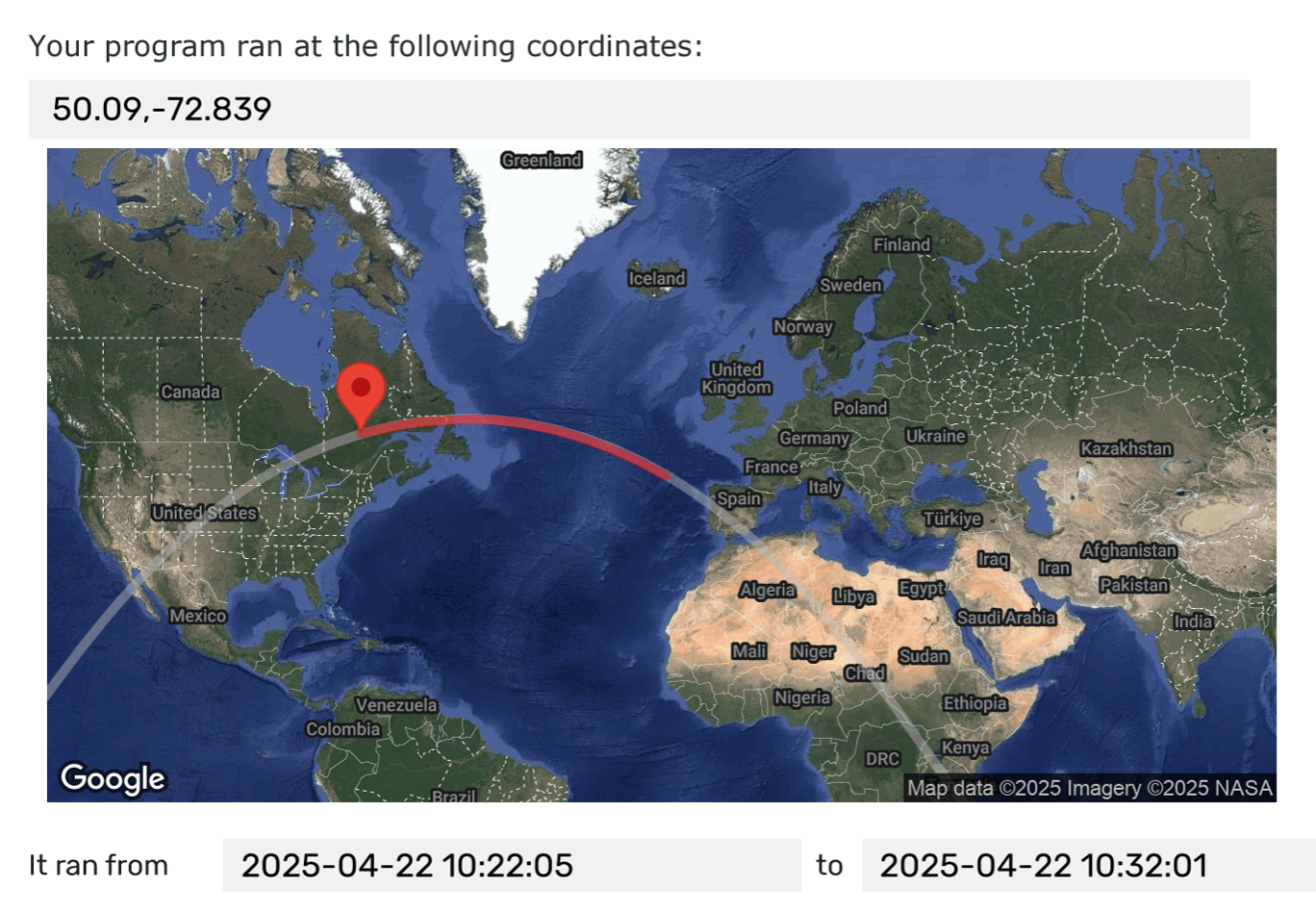
After several weeks of working on this task, I could finally come up with a solution and have implemented it in software. My teammates have approved the solution. My code was uploaded to the space station and ran on 2nd April, 2025.
Source code: AstroPi.zip
Creator guide: Mission-space-lab-creator-guide
ESA certificate: Space_Lab_Certificate_crgs_82483team_250611_113736.pdf
Code execution report
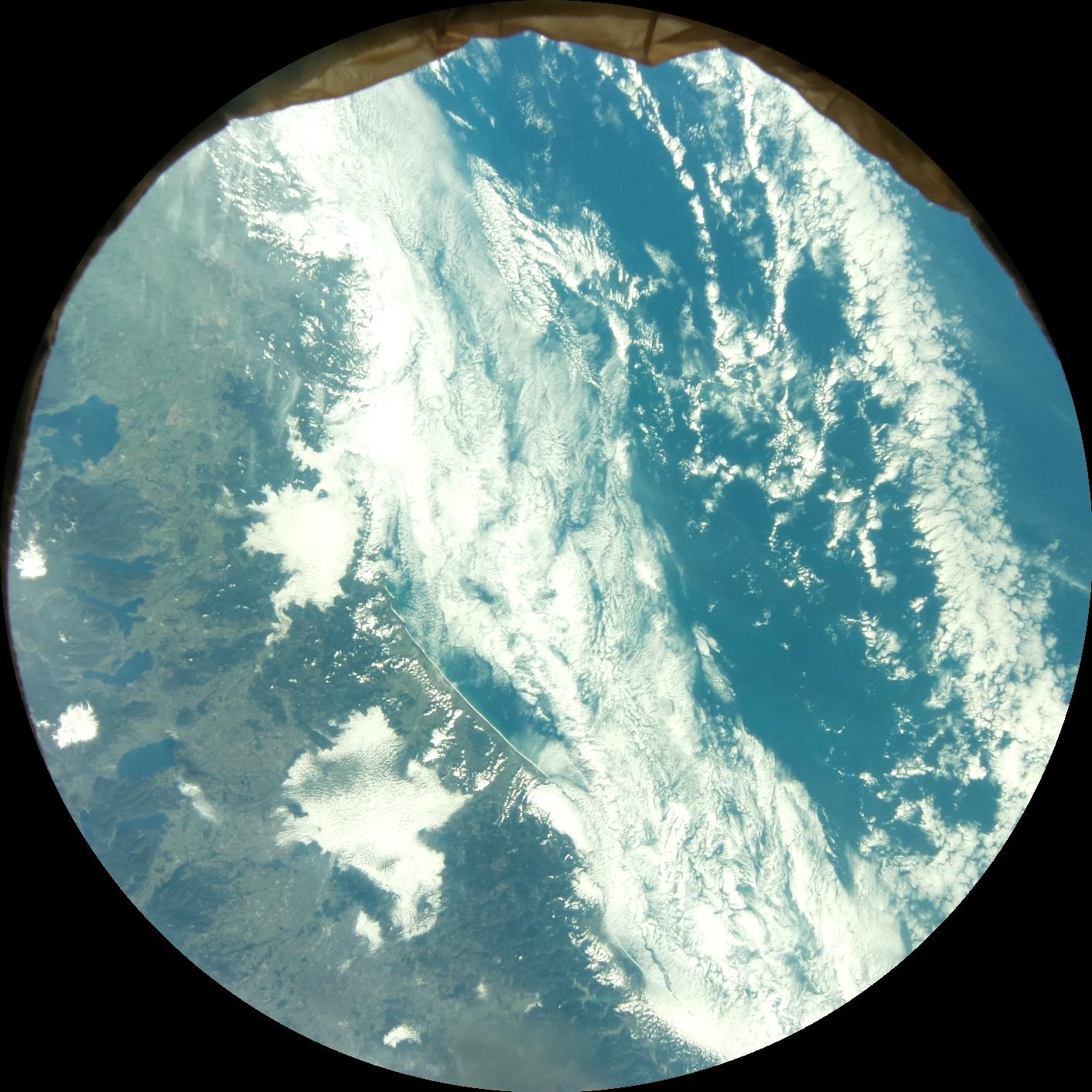
Images
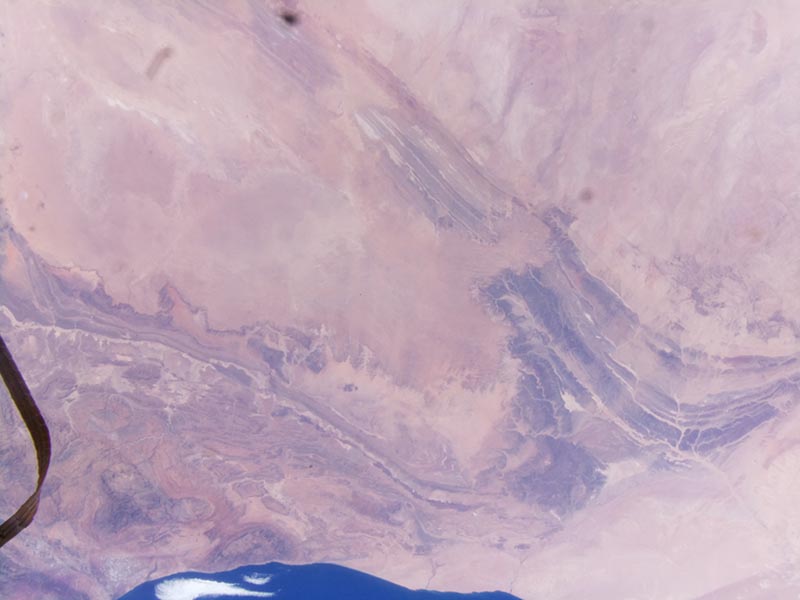
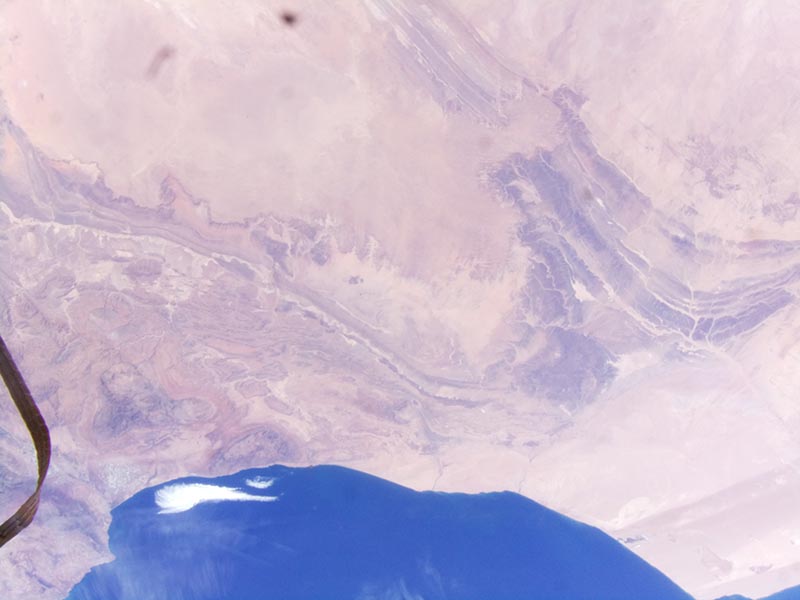
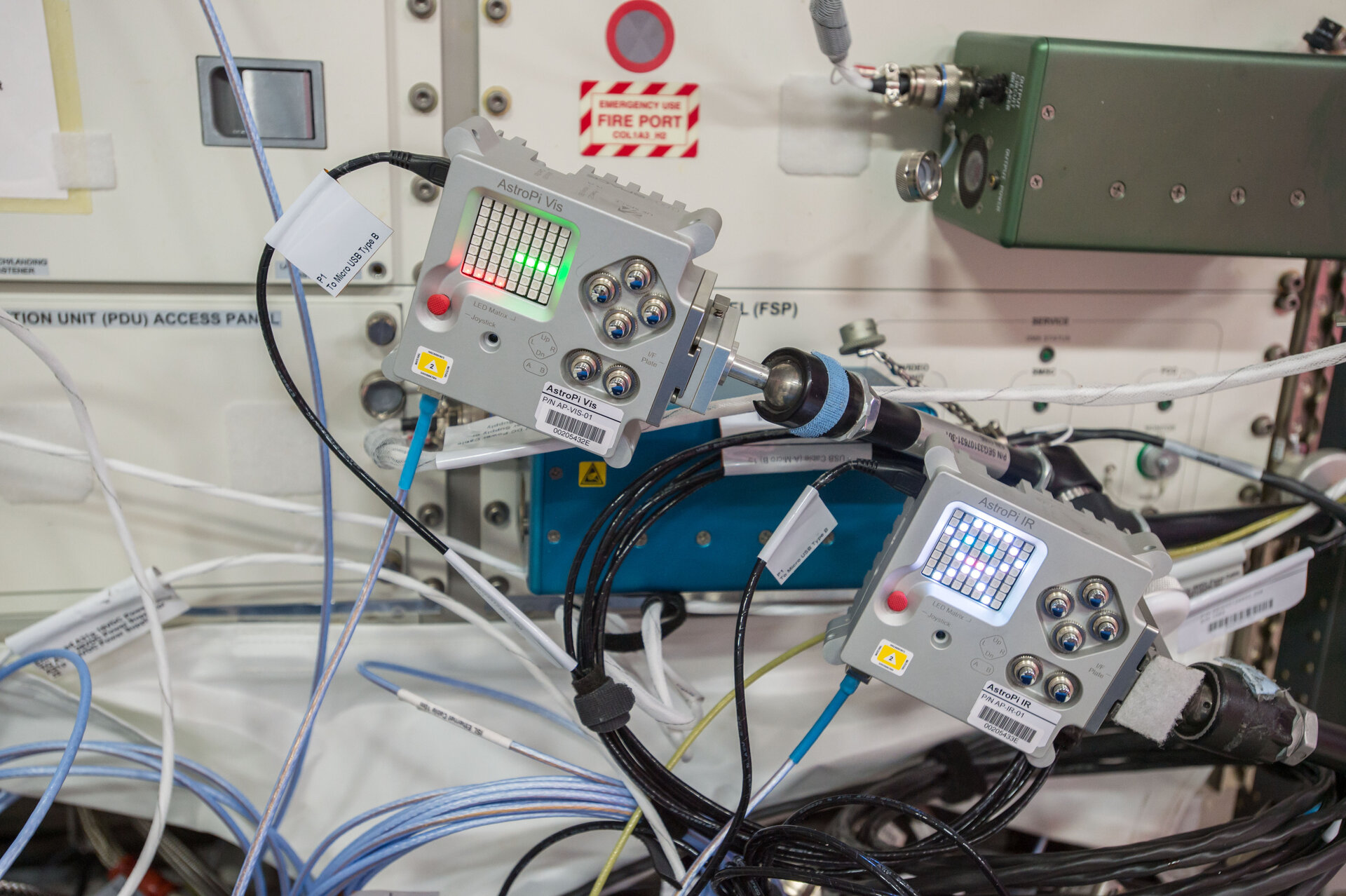
The AstroPI hardware on the International Space Station (ISS)
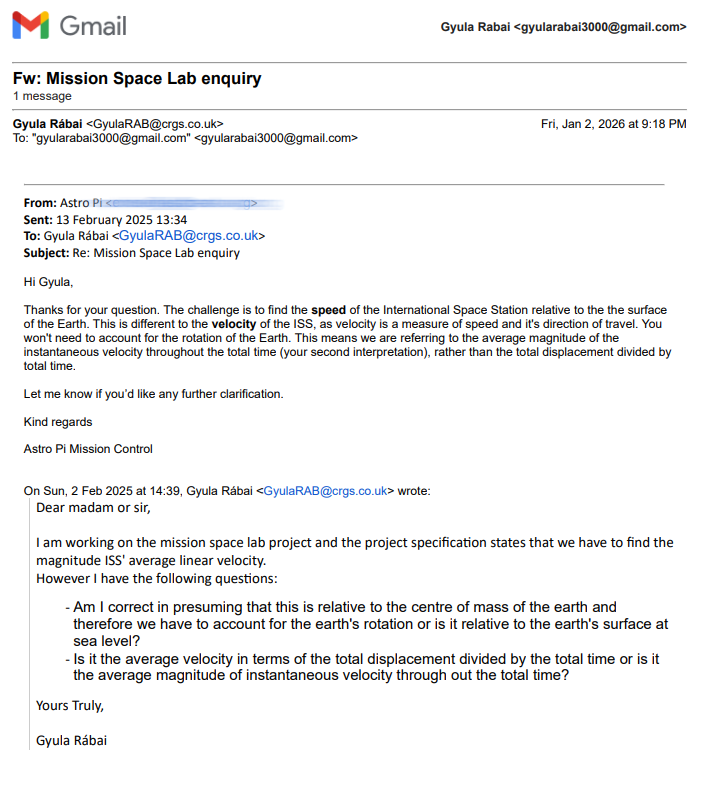
My communication with the European Space Agency
I had multiple exchanges with Astro Pi Mission Control. This was the most interesting: